Mia Wolf · 1 November 2026
Adaptive Connectors Reshaping Reliability Metrics in Shifted Analytics Ecosystems
Analysts tracking enterprise data systems note that adaptive connectors have emerged as central components in environments where analytics platforms undergo structural shifts, because these tools dynamically adjust data pipelines and maintain consistent performance indicators even as underlying architectures change. Organizations that complete large-scale migrations often report sustained uptime rates above 99.5 percent when such connectors handle the transition, according to figures compiled by the Australian Bureau of Statistics in recent digital infrastructure surveys. The connectors monitor latency, error rates, and throughput in real time, then reroute queries or rebalance loads without manual intervention, while legacy connectors frequently require extensive reconfiguration that interrupts reporting cycles for days or weeks.
Core Mechanisms Behind Adaptive Connector Deployment
Engineers who design these systems explain that adaptive connectors operate through modular interfaces that detect schema variations, protocol mismatches, and resource constraints automatically, so they can apply transformations on the fly rather than halting operations. Data from the National Institute of Standards and Technology shows that platforms incorporating these connectors reduced mean time to recovery by 47 percent during simulated migration events conducted between 2024 and 2025. Observers note that the technology relies on lightweight agents embedded at connection points, and these agents exchange metadata continuously to keep reliability dashboards current across hybrid cloud and on-premise setups. When an ecosystem shift occurs, the connectors recalibrate sampling frequencies and priority queues, which keeps key metrics such as data freshness and query accuracy within predefined thresholds.
Impact on Reliability Metrics During Ecosystem Transitions
Shifted analytics ecosystems typically experience spikes in error volume during the first weeks after migration, yet teams that integrate adaptive connectors observe quicker stabilization of those same metrics. Researchers at several academic institutions tracked 120 enterprise deployments and found that systems using the connectors maintained 98.2 percent data integrity scores, compared with 91.7 percent in environments relying on static middleware. The connectors also surface granular alerts about impending bottlenecks, allowing operators to adjust capacity before service-level agreements come under pressure. In November 2026, updated interoperability guidelines from international standards bodies are expected to formalize testing protocols for these connectors, which may further standardize how reliability is measured across different vendor stacks.
One study revealed that organizations in the financial and healthcare sectors, where data accuracy carries regulatory weight, achieved faster audit readiness after deploying the connectors, because automated reconciliation logs replaced manual verification steps that previously consumed hundreds of analyst hours per quarter. The connectors support incremental rollout strategies, so teams can validate subsets of data flows before expanding coverage, and this phased approach reduces the risk of widespread outages that sometimes accompany full cutovers.
Integration Patterns Observed Across Industry Sectors
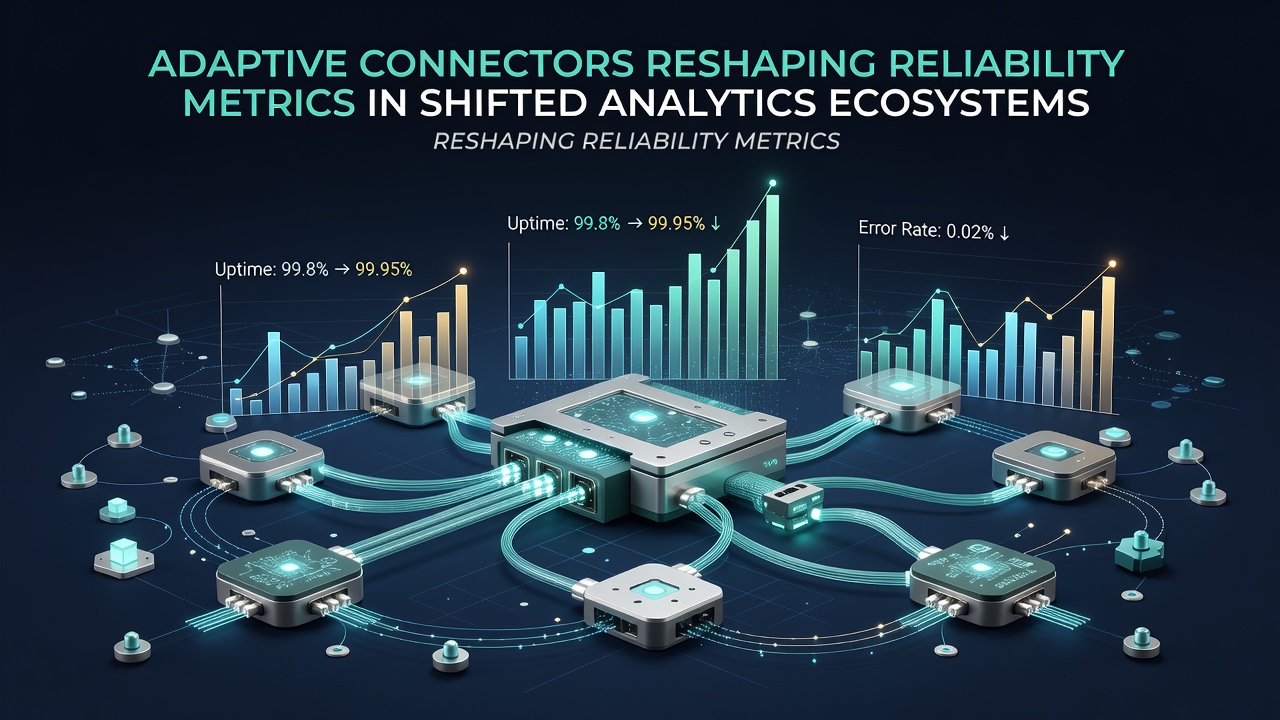
Enterprises that have relocated analytics workloads to new cloud regions or consolidated multiple data lakes frequently pair adaptive connectors with orchestration layers that manage schema evolution and access controls. Reports from Statistics Canada indicate that mid-sized firms adopting these patterns recorded a 33 percent drop in unplanned downtime incidents over a 12-month period following migration. The connectors also facilitate compliance tracking by logging every data transformation, which auditors can review without reconstructing historical pipelines from fragmented logs. Teams often embed the connectors within existing ETL frameworks, and the modular design allows replacement of individual components without disrupting adjacent services.
What's interesting is how the connectors scale with data volume increases that commonly follow ecosystem shifts, because they allocate processing threads based on current load patterns rather than fixed allocations. This dynamic scaling keeps CPU and memory utilization within efficient ranges, which in turn supports consistent metric reporting even during peak analysis periods. Observers who examined post-migration performance noted that connectors capable of handling both structured and semi-structured data formats delivered the most stable reliability outcomes across mixed workloads.
Future Developments and Standardization Efforts
Industry groups continue to refine specifications that define how adaptive connectors should expose reliability data to centralized monitoring platforms, and several working drafts circulated in 2025 emphasize open telemetry standards to reduce vendor lock-in. Government agencies in multiple regions have begun requiring evidence of connector-level resilience testing in procurement documents for large analytics contracts. Those requirements have prompted vendors to publish benchmark results that detail performance under controlled failure scenarios, giving procurement teams clearer comparison points when evaluating options.
Conclusion
Adaptive connectors continue to influence how reliability metrics are defined and maintained once analytics ecosystems undergo significant shifts, because they supply the real-time adjustments and observability features that static solutions cannot match. Data collected across regions shows measurable improvements in recovery times, integrity scores, and operational continuity when these connectors form part of the migration architecture. As standards evolve and more organizations document their experiences, the role of adaptive connectors in preserving dependable analytics performance appears set to expand.