Theo Neumann · 20 September 2026
Examining Automated Failover Protocols That Protect Revenue Streams in Relocated Subscription Services
Understanding Relocated Subscription Services and Revenue Protection
Subscription services that relocate infrastructure often face disruptions when primary systems shift to new locations, and automated failover protocols step in to maintain continuous access for users while preserving payment flows. These protocols detect failures in real time and redirect operations to backup environments without manual intervention, which keeps recurring revenue intact during transitions that might otherwise halt service delivery for hours or days. Data from industry reports indicates that even brief outages can lead to measurable drops in subscription renewals, especially when customers encounter payment errors or inaccessible accounts during the move.
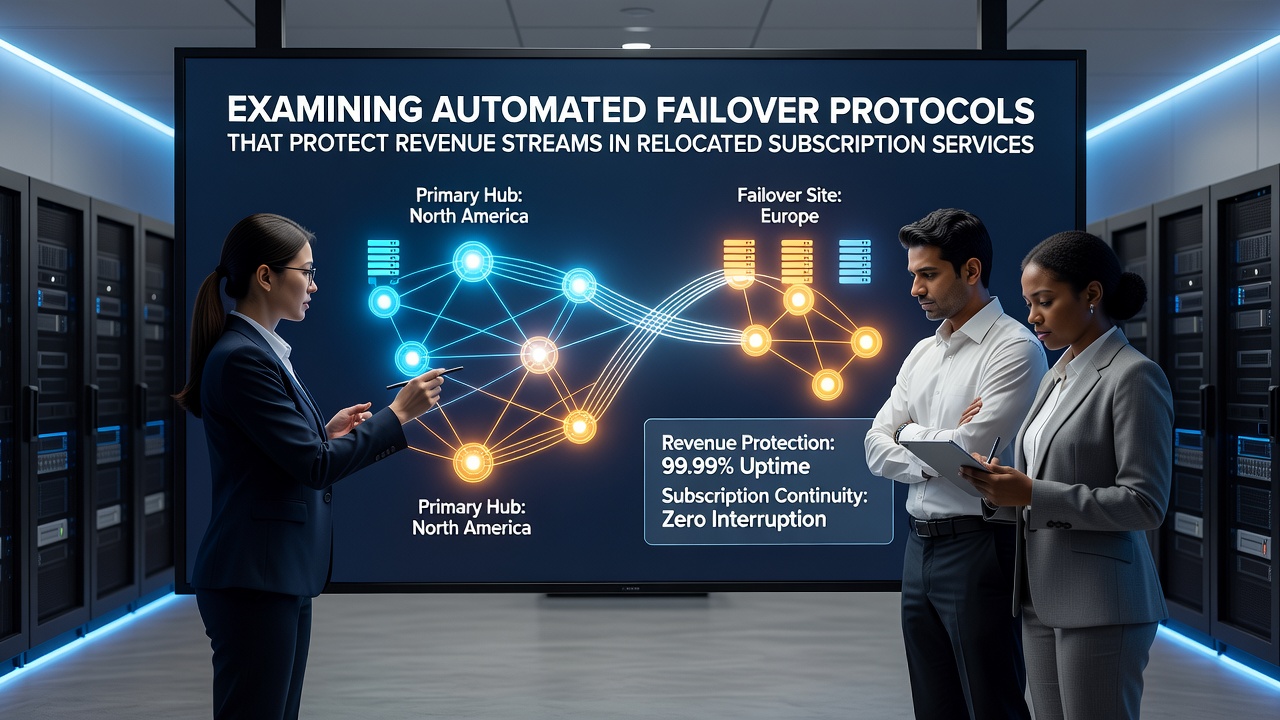
Researchers at various academic institutions have documented how failover mechanisms integrate with subscription management platforms to monitor database replication and API endpoints across relocated sites. When a primary node in one geographic region goes offline, the system automatically promotes a secondary node in another region, ensuring that billing cycles and user authentication continue uninterrupted. This process relies on predefined thresholds for latency and error rates, which trigger switches that occur in seconds rather than minutes.
Core Components of Automated Failover in Subscription Environments
Health checks form the foundation of these protocols, running constant queries against servers that handle subscription data, payment gateways, and content delivery networks. Load balancers evaluate response times and availability metrics before routing new requests, while orchestration tools such as container management systems coordinate the handoff between active and standby instances. Studies from North American research centers show that combining these elements reduces mean time to recovery by significant margins compared to manual failover approaches.
Database synchronization plays a central role because subscription records must remain consistent across sites to avoid duplicate charges or lost entitlements. Asynchronous replication methods allow primary databases to update secondaries continuously, and conflict resolution algorithms handle any discrepancies that arise during the switchover. According to findings published by European technology consortia, services using these replication strategies maintain revenue continuity rates above 99 percent even when entire data centers require relocation.

Revenue Impact Data and September 2026 Developments
Figures compiled by government statistical agencies in Canada and Australia reveal that subscription platforms experience average revenue losses of several thousand dollars per hour during unplanned downtime, with cumulative effects compounding when migrations coincide with peak billing periods. Automated failover counters these losses by preserving session continuity, which prevents cart abandonment and supports seamless renewals. In September 2026, updates to cloud provider tools introduced enhanced multi-region orchestration features that allow subscription services to test failover scenarios more frequently without impacting live users.
Observers note that these enhancements include improved logging for compliance audits, which helps services demonstrate adherence to data residency rules during relocations. Industry organizations focused on digital commerce have reported that platforms adopting the newer protocol versions saw measurable reductions in support tickets related to access issues post-migration. The ball remains in the court of service operators to configure alert thresholds appropriately, since overly sensitive triggers can cause unnecessary switches that still incur minor costs.
Implementation Patterns Observed Across Different Regions
Take one research project conducted by a university team in Asia that examined failover across relocated subscription platforms serving millions of users. Their analysis found that pairing automated protocols with geographic load distribution maintained payment processing uptime even when primary facilities underwent hardware refreshes. Another case from South American trade groups highlighted how integrating failover with fraud detection systems prevented revenue leakage during traffic rerouting, because suspicious transactions continued to route through verified secondary paths.
Those who manage these systems often discover that regular drills, conducted quarterly, expose gaps in protocol configuration before actual relocations occur. The reality is that subscription services handling international payments must align failover rules with varying regulatory requirements across jurisdictions, and this alignment demands careful mapping of data flows to avoid compliance violations during switches.
Conclusion
Automated failover protocols deliver measurable protection for revenue streams when subscription services relocate by ensuring continuous operation through rapid detection and redirection. Evidence from multiple regions shows consistent patterns of reduced downtime and preserved billing continuity when these systems receive proper configuration and testing. As infrastructure shifts continue into late 2026 and beyond, the integration of advanced monitoring with established replication techniques remains central to maintaining stable income for operators who depend on recurring subscriptions.