Harper Brooks · 6 September 2026
Navigating Post-Migration Challenges in Subscription Platform Ecosystems
Subscription platform migrations have become a regular occurrence as companies update their infrastructure, switch providers, or consolidate services following acquisitions, and these shifts bring a range of operational hurdles that affect billing continuity, data accuracy, and user access patterns. Organizations often handle millions of active accounts during such transitions, which means even small discrepancies in synchronization can lead to widespread service interruptions.
Data Synchronization and Integrity Issues
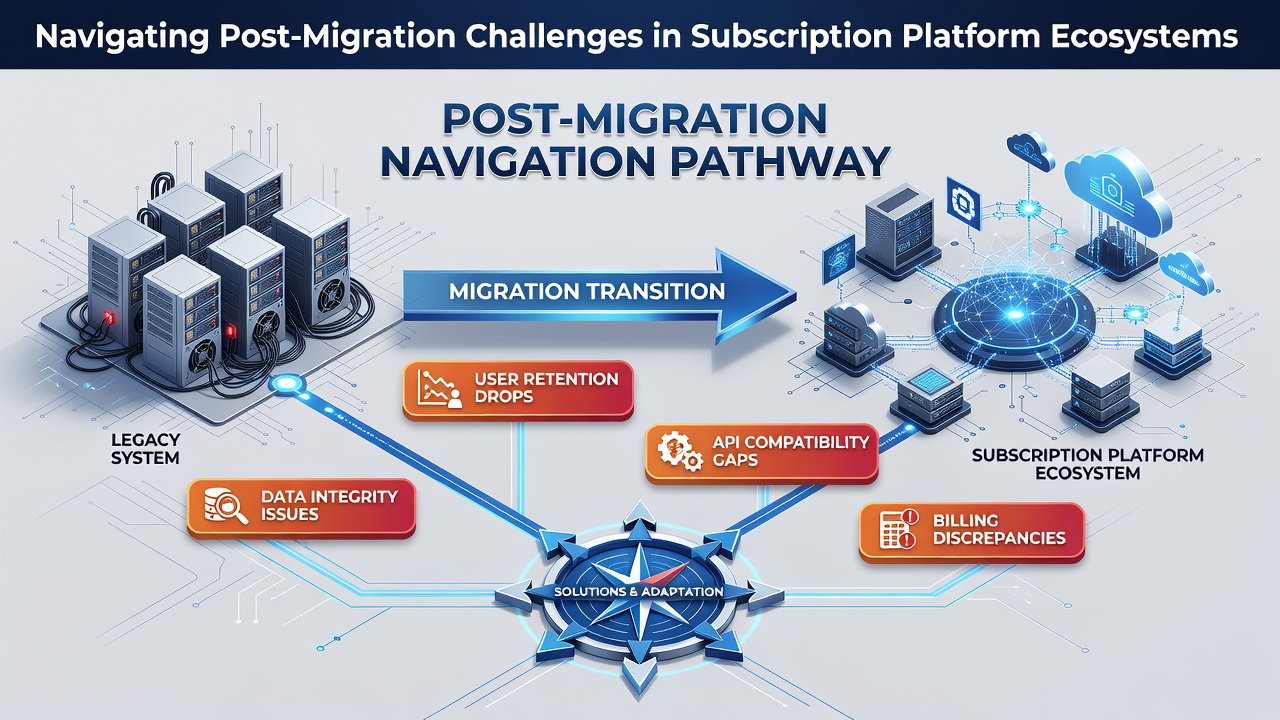
Transferring subscription records requires precise mapping between legacy and new databases, yet mismatches in field formats or incomplete audit trails frequently surface after the cutover date. Research from industry reports shows that up to 15 percent of user profiles may contain outdated payment methods or renewal dates when systems move without full validation cycles, and this forces support teams to resolve individual cases over subsequent weeks. Observers note that platforms relying on third-party data warehouses encounter extra layers of complexity because API rate limits and latency variations disrupt real-time reconciliation processes.
One study conducted across multiple SaaS providers found that encryption key rotations during migration created temporary access blocks for roughly 8 percent of subscribers, prompting administrators to implement phased rollouts instead of single-switch events. Those who manage these projects report that automated scripts catch most anomalies, but manual reviews remain necessary for edge cases involving international tax jurisdictions or legacy promotional codes.
Billing Continuity and Revenue Recognition
Maintaining uninterrupted charges becomes critical once the new platform assumes control, and any gap in authorization tokens can result in failed transactions that compound over renewal cycles. Data from the Federal Trade Commission indicates subscription-related billing complaints rose 22 percent in periods following major platform changes between 2023 and 2025, with users citing unexpected declines or duplicate charges as primary concerns. Federal Trade Commission guidelines emphasize transparent notification timelines, yet implementation varies widely depending on the scale of the subscriber base.
Payment processors also adjust their fraud detection models after migrations because transaction patterns shift when new merchant identifiers appear, and this adjustment period sometimes lasts four to six weeks. Companies that test with synthetic transactions beforehand reduce the volume of flagged payments, while those that skip such rehearsals face higher chargeback ratios until thresholds stabilize.

User Access and Experience Adjustments
Account login flows often change during platform transitions, and users encounter new authentication requirements that include additional verification steps or updated mobile applications. Metrics tracked by service operators reveal temporary drops in daily active sessions of 10 to 18 percent immediately after migration, followed by gradual recovery as users adapt to revised interfaces. Those managing support queues observe that password reset requests spike three to five times above baseline levels during the first 72 hours.
Content libraries and personalized recommendations sometimes require re-indexing on the target system, which delays full feature parity for several days. Platforms that maintain parallel environments during the switch allow select user cohorts to preview the new setup, and this approach has correlated with faster stabilization of engagement numbers according to internal benchmarks shared at industry conferences.
Regulatory Compliance Updates Effective September 2026
New data portability standards scheduled for enforcement in September 2026 across multiple jurisdictions will require subscription providers to deliver structured export files within 30 days of user requests, and this timeline adds pressure on systems still recovering from recent migrations. The Australian Competition and Consumer Commission has outlined similar expectations for consumer-facing services, focusing on clear consent records and cancellation pathways. Australian Competition and Consumer Commission documentation highlights recurring issues with prorated refunds when accounts move between platforms, prompting operators to revise their refund engines ahead of the deadline.
European regulators continue to monitor cross-border data transfers under updated adequacy decisions, and subscription services handling EU residents must document lawful bases for processing after infrastructure changes. Companies that incorporate automated compliance checks into their migration checklists report fewer follow-up inquiries from supervisory authorities during post-launch audits.
Infrastructure and Vendor Coordination
Cloud resource provisioning often needs recalibration once traffic patterns settle on the new platform, and over-provisioning during the initial phase prevents outages while under-provisioning risks performance degradation during peak renewal periods. Coordination between the outgoing and incoming vendors determines how quickly DNS updates and webhook endpoints propagate, with propagation delays sometimes extending beyond the planned maintenance window.
Monitoring tools require reconfiguration to track new error codes and latency metrics, and teams that retain historical dashboards alongside fresh ones gain clearer visibility into regression trends. Those who document every configuration change during the migration maintain better traceability when troubleshooting issues that emerge weeks later.
Conclusion
Post-migration stabilization in subscription ecosystems depends on coordinated efforts across data, billing, user experience, and compliance domains, with measurable outcomes tracked through retention rates and support ticket volumes. Organizations that establish clear rollback procedures and extended monitoring windows address emerging issues before they affect large subscriber segments. As regulatory requirements evolve through 2026, ongoing documentation practices help platforms meet transparency obligations while preserving revenue streams and user trust.