Alex Hoffmann · 15 November 2026
Shifts in Data Flow Architectures: The Impact of Adaptive Integration Layers on Enterprise Efficiency
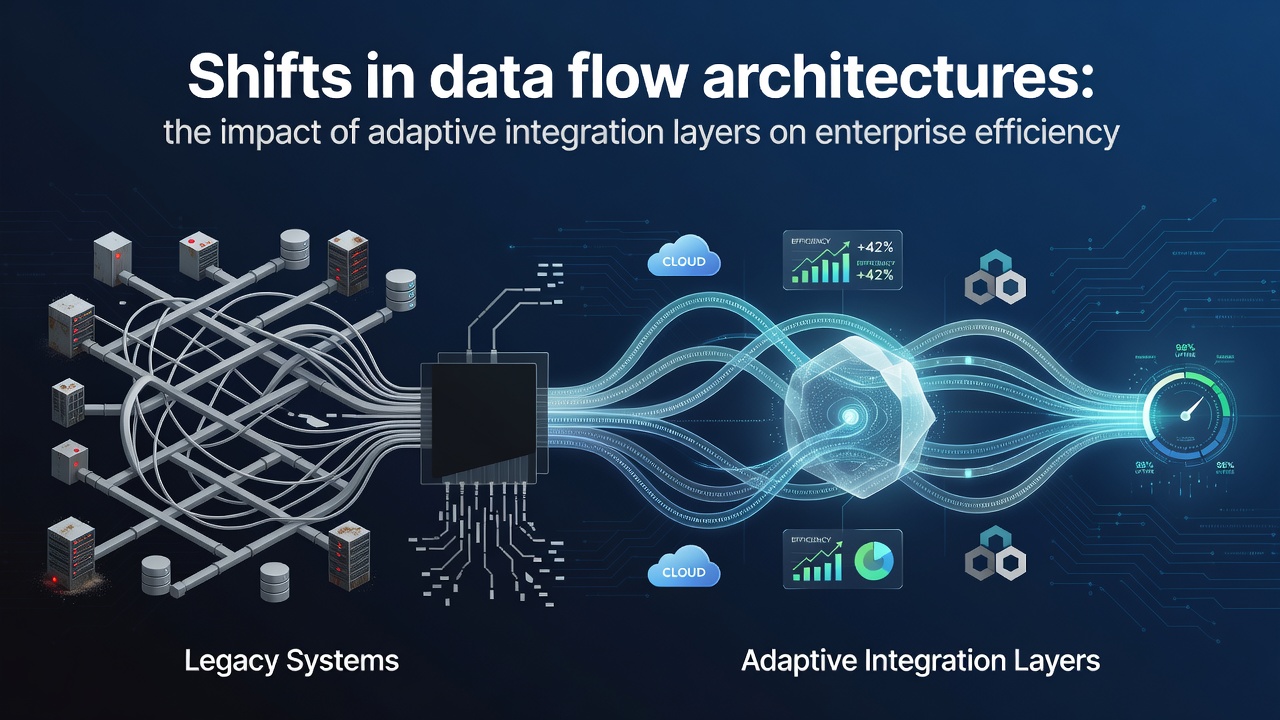
Enterprises have moved away from rigid, batch-oriented data pipelines toward architectures that emphasize real-time adaptability, and this transition gained momentum through 2025 into November 2026 as organizations scaled hybrid cloud environments. Traditional extract-transform-load processes often required manual schema mapping and scheduled runs that created delays when source systems changed, yet adaptive integration layers now detect structural variations automatically and reroute flows without halting operations. Researchers at several institutions documented these patterns in reports covering thousands of deployments across North America and Europe.
Historical Context of Data Movement in Large Organizations
Early enterprise systems relied on point-to-point connections that multiplied as departments added applications, which created maintenance burdens that grew linearly with each new connection, while centralized data warehouses attempted to solve fragmentation but introduced single points of failure during peak loads. By the mid-2010s, organizations began experimenting with message queues and event-driven designs to handle streaming inputs, although these still depended on predefined mappings that broke when external partners altered their APIs. Data from industry analyses shows that companies spent an average of 30 percent of IT budgets on integration upkeep before adaptive approaches appeared.
How Adaptive Integration Layers Function
Adaptive integration layers sit between source systems and target repositories, using metadata inspection and machine learning models to infer field relationships on the fly, and they adjust transformation rules when column names shift or data types evolve. Unlike static middleware, these layers maintain version histories of mappings and apply updates across distributed nodes simultaneously. Observers note that the technology incorporates schema registries that publish changes in near real time, allowing downstream consumers to receive notifications and reconfigure without code deployments. What's interesting is that the same mechanisms handle both structured records from ERP databases and unstructured logs from IoT sensors within a single pipeline.
Measured Effects on Operational Efficiency
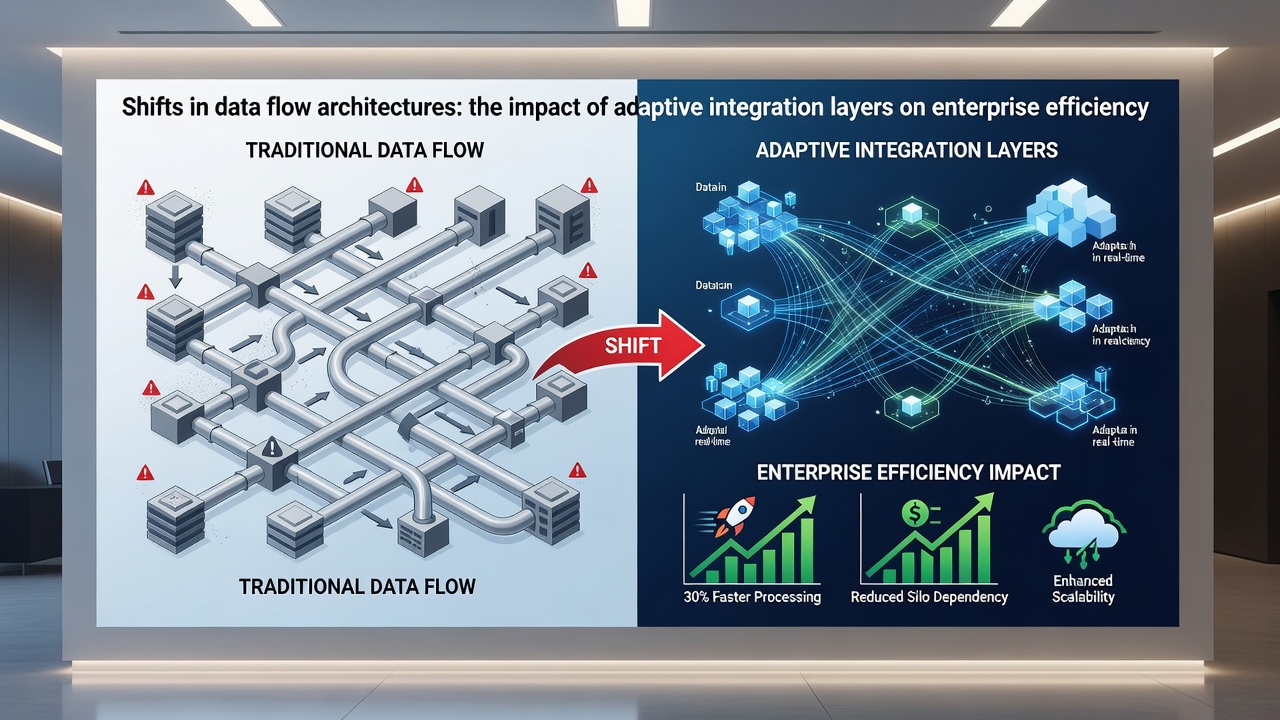
Organizations that implemented adaptive layers reported reductions in integration-related outages, with one analysis covering 2026 deployments indicating average uptime improvements of 18 percent compared to prior architectures. Processing latency dropped because data no longer waited for nightly batch windows, and analysts could query fresher datasets for decision support. Figures from a Canadian research consortium tracking mid-sized manufacturers revealed that staff hours devoted to troubleshooting mapping errors fell by roughly 40 percent after migration, freeing resources for higher-value tasks such as model development. The reality is that cost savings appear in both infrastructure and personnel categories, since fewer dedicated integration specialists are required to maintain stable flows.
Implementation Patterns Observed Across Sectors
Financial services firms adopted adaptive layers to reconcile transaction streams from multiple clearinghouses that update formats quarterly, while healthcare providers used them to merge patient records arriving from disparate electronic health record vendors. Retail chains applied the technology to synchronize inventory data between point-of-sale terminals and supplier portals that change during peak seasons. Each case demonstrates that the layers scale horizontally by adding compute instances rather than rewriting connection logic. A 2026 study from an Australian university consortium examined 120 deployments and found that time-to-value for new data sources shortened from weeks to days once the adaptive components were in place.
Technical Considerations During Rollout
Teams must establish governance around metadata standards before deploying adaptive layers, otherwise conflicting inferences can propagate through pipelines. Security protocols require encryption of both data in transit and the mapping rules themselves, since these rules now contain business logic. Monitoring dashboards track not only throughput but also the frequency of automatic adjustments, giving operators visibility into how often the system self-corrects. Experts have observed that phased rollouts, starting with non-critical reporting flows, reduce risk compared to full cutovers, and organizations that followed this sequence encountered fewer rollback events.
Developments Noted in Late 2026
As of November 2026, several open-source projects released updated libraries that embed adaptive logic directly into popular orchestration tools, lowering barriers for smaller enterprises. Regulatory bodies in the European Union issued guidance encouraging standardized interfaces that complement these layers, which in turn supports cross-border data exchange without custom adapters for each jurisdiction. The shift continues as hardware accelerators become available for the inference engines that power schema detection, promising further gains in throughput.
Conclusion
Adaptive integration layers have altered how enterprises manage data movement by replacing static connections with systems that respond dynamically to change, and the documented outcomes include shorter processing cycles along with lower maintenance overhead. Continued refinement of these components, supported by contributions from academic and governmental sources across multiple regions, points to sustained evolution in data flow architectures through the coming years.